
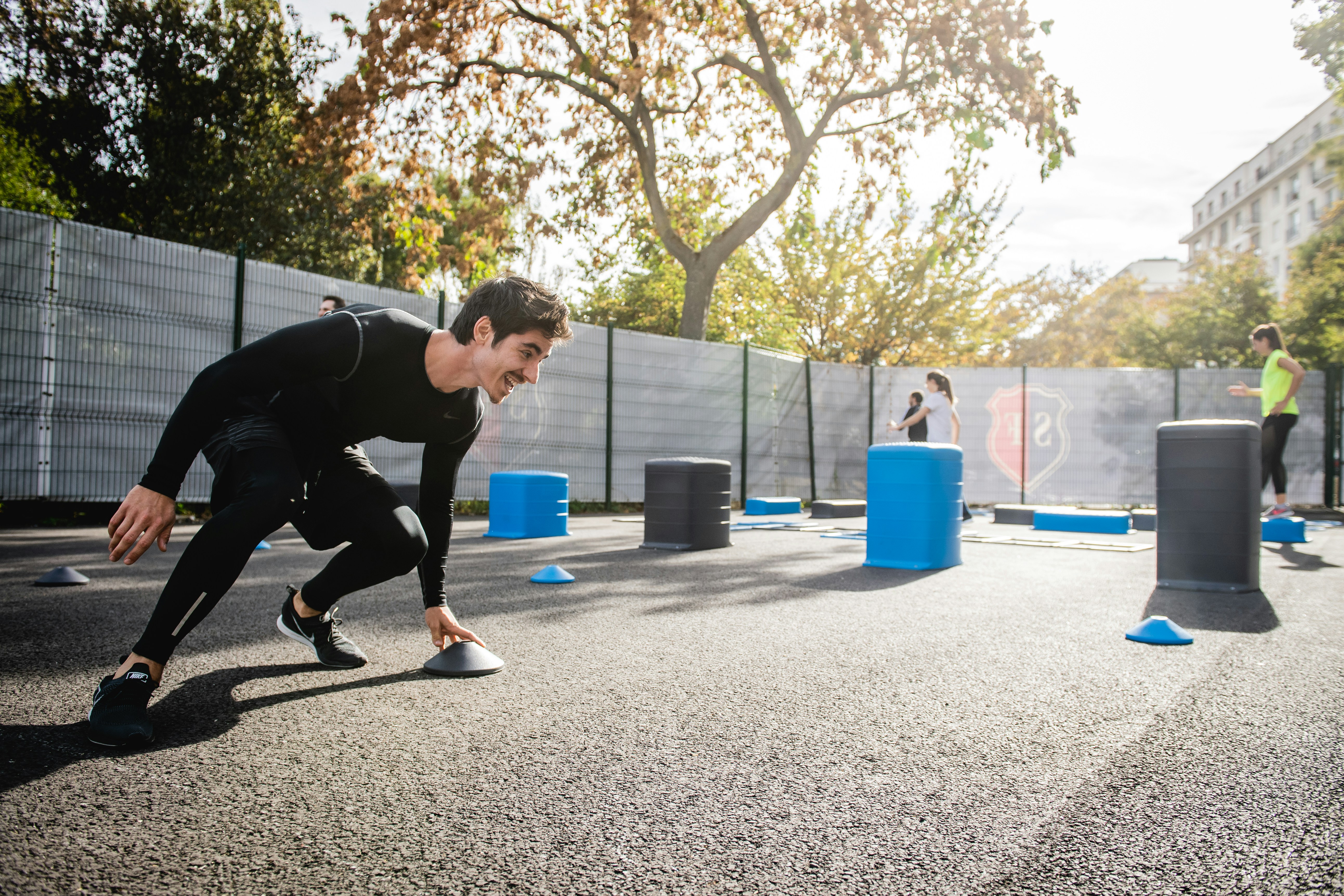
If we become better movers, we become more athletic.
Yes, resistance training, plyometrics, and all of the other ways to develop a stronger, quicker, more athletic body help, too.
But some of the lowest-hanging fruit is learning how to move better. This starts with understanding your own movement patterns. Then find ways to make them more efficient and adaptable to your environment.
A soccer player might not see how they don’t pump their arms while sprinting. Or a volleyball player might not drop their hips to load their feet before a jump. Or a basketball player might not understand how to move their feet on defense to stay balanced and not overreact.
Many times, athletes find ways to survive in performance. Their bodies figure out ways to move or perform a skill. And it might work. But it’s not guaranteed that it will always work. Maybe next season it won’t. Or next game. Or perhaps it will continue to work but there is another way that could work better.
Finding ways to move better is the primary challenge for athletes and coaches. And this is a personal journey that looks a little different for everyone.
Every person’s body is different. Their patterns of movement are different. They have different strengths and weaknesses.
Regardless of the reasons getting in the way of athletes moving better, part of our job as coaches is to help them unlock this potential. When athletes become better movers, they are better able to solve performance problems. And our overall mission is to help athletes find and implement solutions to their performance problems. Again, and again, and again.
As much as I want to act like a mad scientist working to find a magical formula for becoming more athletic, helping athletes become better movers is a great place to start. It’s hands-on, practical, and relational.


